








Get Marketing Insights First
Subscribe to receive actionable strategies, growth tips, and industry insights delivered straight to your inbox.
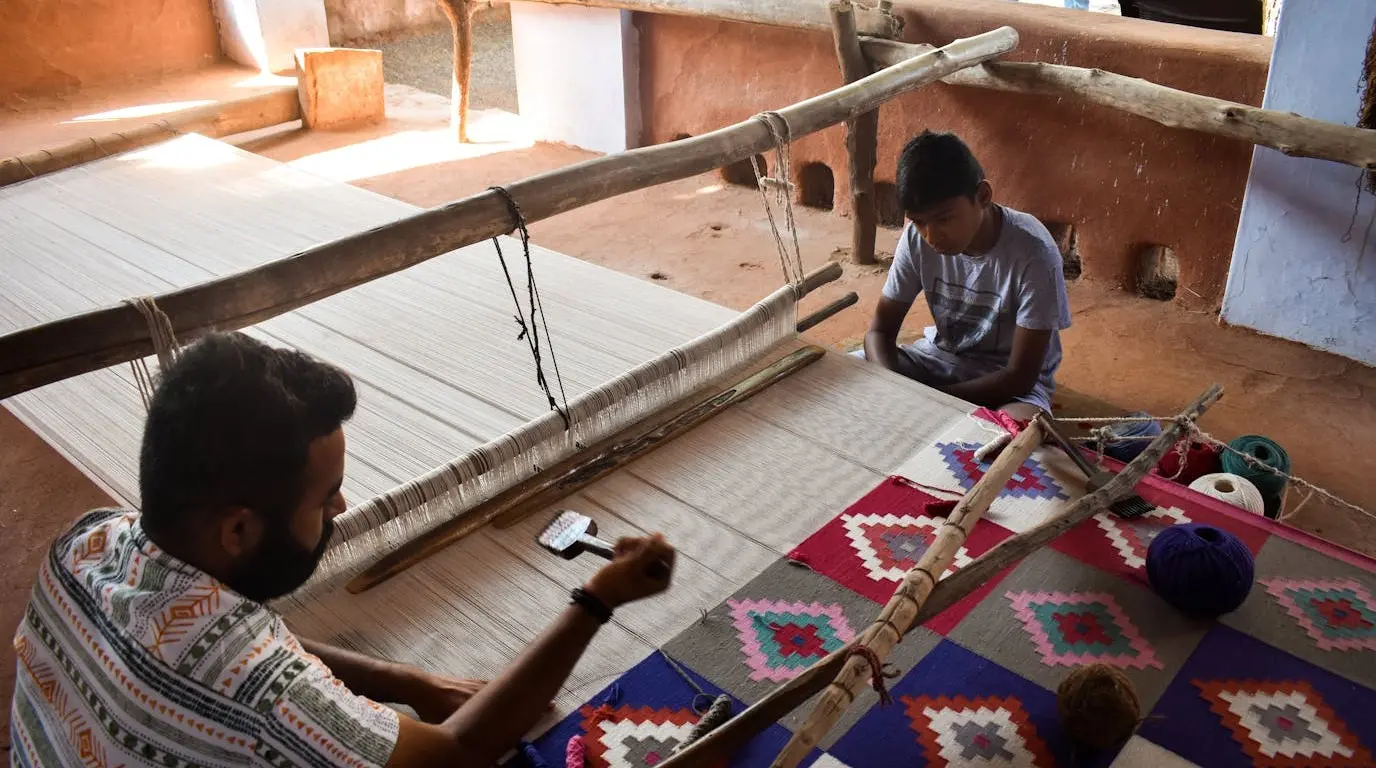
When you hold a piece of handloom fabric, you are holding something made slowly, carefully, and by human hands. In India, weaving is not just a process—it is a tradition that people have practiced for generations. Every thread passes through the hands of a skilled artisan, and that is what makes handloom fabric feel different.
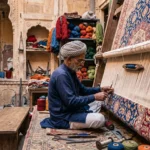
Across regions like Varanasi, Bhuj, and Patan, families continue this craft as part of their everyday life. You will often find that weaving happens at home, where each family member contributes in some way.
Handloom refers to fabric woven manually on a loom without using electricity. Every thread is placed by hand, which makes each product unique.
India is one of the largest producers of handloom textiles globally, contributing a significant share of world production. The sector also plays a major role in employment, especially in rural and semi-urban areas.
Some of the most important handloom clusters where this craft is practiced include:
These clusters often have thousands of looms and generations of skilled artisans.
Handloom weaving is usually a family-based craft. Different members may handle different tasks such as:
Most artisans come from rural backgrounds and inherit these skills through generations.
The main raw material in handloom weaving is yarn. Different types include:
Raw material cost often forms a large portion of the total production cost.
Before the weaving starts, it helps to understand what goes into making the fabric. The most important material is yarn. Artisans use cotton, silk, wool, or blended fibers depending on the type of fabric they want to create. They also use dyes to add color and natural mixtures to prepare the yarn.
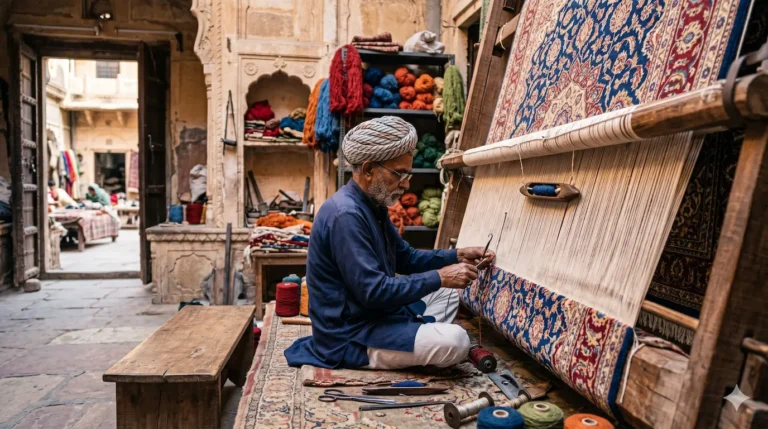
The loom is the main tool in this process. It holds the threads in place while the weaver works. Along with the loom, simple tools like bobbins, spools, and a wooden beater help in shaping the fabric. Even though the tools look simple, using them well takes practice.
The process begins with choosing the yarn. In many villages, artisans still spin yarn by hand, while others source it from local markets. The quality of the yarn plays a big role in how the final fabric will look and feel.
Next comes the design. The weaver decides what kind of pattern the fabric will have. Sometimes they draw it on paper, and sometimes they take inspiration from existing textiles. Floral and geometric designs are quite common.
The weaver keeps the design close and follows it while weaving.
Before placing the yarn on the loom, artisans prepare it so that it becomes strong enough to handle tension. They apply a paste made from rice and flour, which helps the threads stay firm during weaving.
After this, the yarn is left to dry properly.
Color brings life to the fabric. Artisans dye the yarn using natural or synthetic colors. Traditionally, they used plant-based dyes made from leaves, roots, and bark. Today, many weavers also use modern dyes to achieve brighter and more consistent shades.
Once dyed, the yarn is dried completely before it is used.
Now the loom is prepared. The weaver arranges the threads carefully according to the required size and design of the fabric. This step needs patience because even a small mistake can affect the weaving later.
The weaver stretches the warp threads across the loom. These threads form the base of the fabric. They are arranged in a continuous sequence, creating a strong structure for weaving.
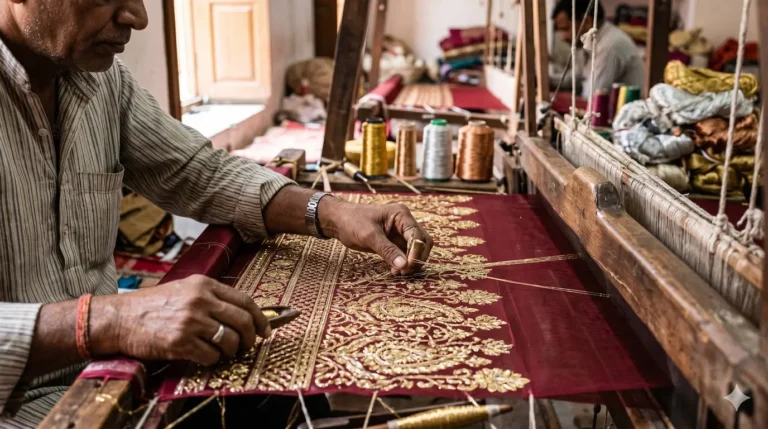
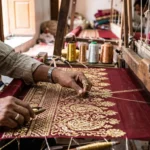
At this stage, the weaving begins. The weaver follows the design and starts interlacing the threads. This step requires focus, as the pattern must remain consistent from start to finish.
The weaver passes the weft thread through the warp threads in an over and under pattern. After each pass, they press the threads into place using a wooden beater.
This process continues again and again, slowly building the fabric row by row.
Once the weaving is complete, the fabric is taken off the loom. The weaver trims extra threads and cleans the fabric to give it a neat finish.
The fabric is now ready to be used, whether for clothing, home décor, or traditional wear.
Handloom weaving allows artisans to create a wide range of products, including garments, scarves, shawls, bed sheets, and decorative textiles. Each piece carries the identity of the region where it was made.
Handloom fabric supports artisans and keeps traditional skills alive. It also uses less machinery, which makes it more environmentally friendly. When you choose handloom, you support both people and tradition.
Each piece is handmade, so no two fabrics are exactly the same.
Yes, when you follow it step by step, the process becomes easy to understand.
Cotton is usually the easiest for beginners because it is simple to handle.
It depends on the design and size, but it can take several hours to several days.
Yes, most handloom fabrics feel breathable and comfortable, especially in warm climates.
If this guide helped you understand handloom weaving, you can share your feedback or suggestions. Your input helps improve future content and supports awareness of traditional crafts.
 Free Shipping on Orders 1499 above